Health and Safety Policy for Garden Clearance Chessington
Garden Clearance Chessington is committed to ensuring the health, safety and welfare of all employees, contractors and members of the public affected by our garden clearance and rubbish removal work. This policy sets out the measures we adopt to minimise risks associated with garden waste clearance, tree and shrub removal, composting, and transport of green waste. The objective is to provide safe systems of work, to maintain a safe site environment and to promote a culture where safety is an integral part of every task.Scope and Responsibilities
This policy applies to all operations undertaken by our garden tidy-up and rubbish collection teams across the service area. It covers on-site activities, vehicle loading and unloading, use of tools and machinery, manual handling, and disposal. Management will ensure adequate resources are available for safe operations. Employees and subcontractors are responsible for following safe working procedures and for reporting hazards. Supervisors will monitor compliance and support competency development. All personnel involved in garden clearance services must understand their duties. The person in charge at each job is responsible for conducting a site-specific risk assessment before work begins, ensuring control measures are in place, and confirming that everyone on-site has the appropriate personal protective equipment (PPE). Records of assessments, training and equipment checks will be maintained. The company will review this policy periodically and update practices in line with industry standards.
Risk Assessment and Control Measures
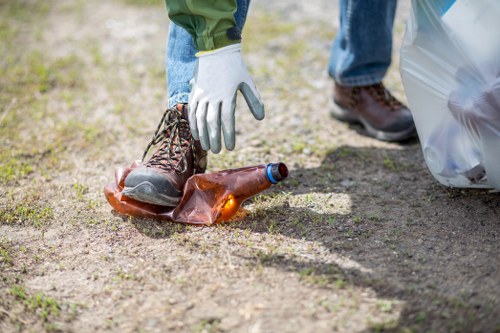
Risk assessments will be proportionate and cover foreseeable hazards including sharp tools, hazardous vegetation (e.g., thorns, nettles), uneven ground, falling branches, dust, noise, and interaction with pedestrians or traffic. Control measures include planning the sequence of work, establishing exclusion zones, and using mechanical aids for heavy loads. Safe work method statements will be prepared for higher-risk activities and made available to all operatives.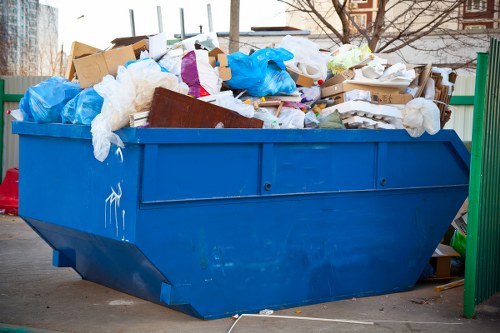 Personal protective equipment is mandatory where risks cannot be adequately controlled by other means. Standard PPE for garden clearance and rubbish removal includes safety helmets where overhead hazards exist, cut-resistant gloves, eye protection, high-visibility clothing, protective footwear and hearing protection for powered equipment. Employees must be trained in correct PPE selection, use and upkeep. Defective equipment must be taken out of service immediately.
Tools and powered machinery such as chainsaws, shredders and powered strimmers will only be used by trained and competent operatives. Equipment inspections are carried out before use and recorded. Where appropriate, guards and emergency stop functions will be engaged and maintenance schedules adhered to. Manual handling controls include mechanical lifting aids, team lifting techniques and minimising loads to reduce musculoskeletal injury.
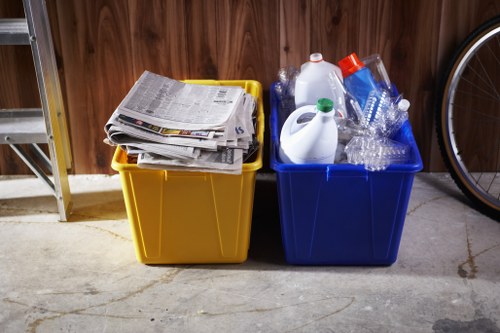
Waste Handling and Transport: correct segregation and handling of garden waste and general rubbish reduces environmental and safety risks. Green waste will be separated from non-organic refuse and stored securely pending collection. Vehicles used for rubbish removal will be loaded safely, with loads secured to prevent spillage during transit. Drivers and loaders will follow safe systems of work for vehicle access and egress, and vehicle checks are carried out daily.
Emergency Procedures and First Aid: First aid provision will be appropriate to the risks identified. First aiders will be available on larger sites and a first aid kit carried on vehicles for smaller operations. In the event of an incident, the priority is to preserve life and to secure the site. All incidents, near misses and dangerous occurrences must be reported promptly through the company incident reporting system. Investigations will identify root causes and corrective actions.
To manage biological hazards such as soil-borne bacteria, used needles or animal waste, employees must avoid direct contact, use puncture-resistant gloves and report such findings immediately. Appropriate hygiene facilities will be provided and workers encouraged to wash hands and change contaminated clothing. Vaccination advice will be made available where applicable.
Monitoring and review are essential to the effectiveness of this health and safety policy. Routine site inspections, audits and toolbox talks will be used to measure performance and ensure compliance with safety protocols. Training and competence will be documented and refreshed regularly to reflect changes in equipment, legislation and best practice. Contractors engaged for garden clearance or rubbish collection must demonstrate equivalent health and safety standards before commencement of work.
 Communication is central to safe operations. Pre-task briefings will outline hazards, control measures and emergency arrangements. Safe working instructions and signage will be visible on site. Any new hazards observed during work require an immediate reassessment of controls and communication to the team. Records of briefings and safety checks will be maintained for accountability and continuous improvement.